

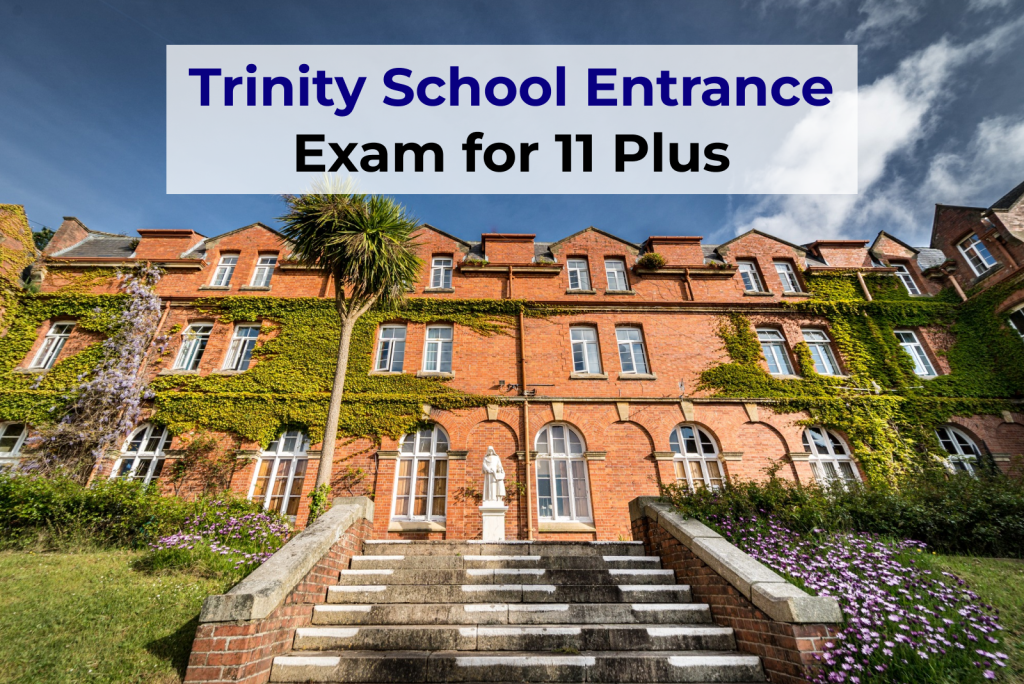
If you’re a parent searching for the best education for your child, then Trinity School is probably already on your radar. Known for strong academic results, discipline, and character-building, Trinity School attracts thousands of applicants every year. The competition is tough, the preparation is intense, and the pressure is real, especially for the 11 Plus entrance exam.
Many parents feel overwhelmed by confusing admission rules, different Trinity school branches, exam formats, and deadlines. Schools like trinity school croydon, trinity high school, holy trinity catholic school, trinity grammar school, and many others follow slightly different systems. This guide will simplify everything for you in plain, easy language.
What Is the Trinity School 11 Plus Entrance Exam?
The 11 Plus exam is an entrance test taken by children aged 10–11 to secure admission into selective schools. Many Trinity institutions,including trinity catholic high school, trinity church of england high school, and holy trinity catholic schools,use this exam to assess academic ability, logic, and problem-solving skills.
The exam normally tests:
- English
- Mathematics
- Verbal Reasoning
- Non-Verbal Reasoning
Some schools also conduct interviews and written tasks after the test.
Why Trinity Schools Are So Popular
Parents across the UK actively search for trinity schools near me because of the strong reputation associated with the Trinity name. Whether it’s trinity school nottingham, trinity school exeter, trinity school london, or trinity school carlisle, these institutions share common strengths:
- High academic standards
- Well-disciplined students
- Focus on character and leadership
- Strong university placement history
- Balanced development through sports & arts
Faith-based institutions like holy trinity ce primary school, holy trinity school, and trinity catholic school nottingham also provide strong moral education alongside academics.
Different Trinity Schools & Their Admission Styles
It’s important to understand that Trinity School is not one single institution. Each school has its own rules. For example:
- Trinity School Croydon: Highly competitive, private boys’ school
- Trinity High School Manchester: Faith-based, selective
- Trinity School Sevenoaks: Grammar-style testing
- Trinity School Colchester: Mixed ability intake
- Trinity School Belvedere & Trinity School Dagenham: Community-focused schools
- Trinity Fields School & Trinity School Devon: Special education and regional campuses
Every parents searches questions like:
- Is Trinity a Catholic school?
- Is Trinity a private school?
- Is Trinity Academy a private school?
The answer depends entirely on the specific branch.
What Subjects Are Tested in the 11 Plus for Trinity Schools?
Most Trinity schools test the same four core skills:
English
- Reading comprehension
- Vocabulary
- Grammar and punctuation
- Creative writing
Mathematics
- Fractions, decimals, percentages
- Word problems
- Mental math
- Geometry
Verbal Reasoning
- Word patterns
- Logical word links
- Code-breaking
Non-Verbal Reasoning
- Shapes and diagrams
- Patterns
- Symmetry
Some trinity catholic schools also check religious understanding during interviews.
Key Dates & Term Information
Parents often panic searching for:
- trinity school term dates
- trinity school term dates 2024/25
While term dates vary by region, most follow this structure:
- Autumn Term: September to December
- Spring Term: January to April
- Summer Term: April to July
Entrance exam applications normally open between May and July, with exams taking place between September and October.
Uniform & School Life
Many parents also search for:
- trinity school uniform
- trinity primary school
- holy trinity primary school
Most Trinity schools require:
- Blazer with school badge
- Formal trousers/skirt
- Tie
- Polished shoes
Discipline, punctuality, and presentation are treated seriously.
Fees Is Trinity Expensive?
Parents frequently ask:
- How much are Trinity school fees?
This depends on whether the school is:
- Private: Fees range from £5,000 to £15,000 per year
- Grammar or Faith School: Often government-funded, minimal fees
Schools like the trinity catholic school, holy trinity high school, and trinity church of england high school may have lower costs.
Is Trinity School Private or Public?
There is often confusion:
- Trinity School Croydon – Private
- Trinity Grammar School – Selective public
- Trinity Catholic High School – Faith-based state school
So the answer to “Is Trinity a private school?” changes by location.
How Hard Is the Trinity 11 Plus Exam?
Very competitive. Thousands apply, few get selected. Children are tested not just on knowledge,but on speed, confidence, and logic.
Students who pass usually:
- Start preparation 1–2 years early
- Practice timed papers weekly
- Work with structured guidance
How Parents Should Prepare Their Child
- Start with English & Math basics
- Add Verbal & Non-Verbal Reasoning gradually
- Follow exam-style practice papers
- Build confidence through mock tests
- Focus on accuracy under time pressure
Common Parent Mistakes
- Starting preparation too late
- Ignoring reasoning subjects
- Overloading children
- Not understanding school-specific requirements
- Panicking instead of planning
Schools With “Trinity” in the Name Parents Often Confuse
Parents often mix:
- Trinity High School Renfrew
- Trinity High School Redditch
- Trinity School Barnsley
- Trinity School Newbury
- Trinity School Teignmouth
- Trinity School of John Whitgift
- The Old Schools Trinity Lane
Each one has a separate exam policy and independent admission process.
What Happens After the Exam?
- Shortlisting
- Interviews
- Offer letters
- Waiting lists
Strong interview performance often decides the final outcome.
Why Parents Choose Trinity Year After Year
✔ Strong exam results
✔ Structured discipline
✔ Moral foundation
✔ Competitive environment
✔ University preparation
The Hidden Skill Tiffin Students Develop Early: Mental Endurance
One quality that quietly separates students who succeed at Tiffin School from those who struggle is mental endurance. This is the ability to stay focused even when tired, to continue solving problems when the brain feels overloaded, and to push through challenge without giving up.
During the 11+ preparation phase, children slowly build this skill through:
- Repeated practice
- Facing timed pressure
- Learning from failed mock tests
- Correcting mistakes again and again
At first, many children resist this process. They complain. They avoid questions. They look for shortcuts. But over time, something changes. The mind becomes stronger. The fear of difficulty becomes smaller. The confidence to say “I can try again” becomes natural. This mental endurance later becomes one of the greatest gifts of a Tiffin education.
Why Some Children Peak Too Early Without the Right Balance
A common danger during intense 11+ preparation is early burnout. Some children peak academically too early because they are pushed too hard, too soon. They memorize aggressively, practice endlessly, and achieve high mock scores , but mentally they become exhausted.
Later, when real challenges increase in secondary school, these children struggle:
- Their motivation drops
- Their curiosity fades
- Their emotional stamina weakens
This is why balance during the Tiffin School preparation phase matters so much. The goal is not just to pass an exam , it is to build a student who can sustain performance for years, not just weeks.
The Difference Between Pressure and Purpose
There is a difference between:
- Pressure that creates fear
- Purpose that creates motivation
Children who feel pressure study because they are afraid of failure. Children who feel purpose study because they understand the value of learning.
Parents play the biggest role in shaping this difference. When children hear:
- You must pass → fear grows
- Do your best → confidence grows
Tiffin School rewards students who think deeply, not those who memorize under fear. Purpose-driven study produces long-term success.
How Reading Habits Shape Tiffin-Level Thinking
Strong readers often have a natural advantage in grammar school exams. Reading:
- Improves vocabulary
- Sharpens comprehension
- Builds inference skills
- Strengthens attention span
- Children preparing for Tiffin School who read regularly often find:
- English papers feel easier
- Verbal reasoning becomes quicker
- Writing becomes clearer
- Confidence rises naturally
- The type of reading also matters:
- Fiction improves imagination
- Non-fiction builds logic
- Biographies teach perseverance
- Newspapers strengthen real-world understanding
This is why reading is not just a hobby during 11+ preparation , it is a silent academic weapon.
What Tiffin Students Learn About Competition
Competition exists everywhere at Tiffin School , in academics, sports, debating, music, and leadership roles. But what often surprises parents is how students learn to compete without bitterness.
Over time, children understand:
- Someone will always be better at something
- Someone will always be behind in something
- What matters is consistent self-improvement
- This mindset protects students from:
- Toxic comparison
- Jealousy
- Inferiority complexes
- Arrogance over success
They learn to respect excellence without being crushed by it.
The Role of Failure in Academic Growth
Many parents try to shield children from failure during 11+ preparation. But controlled, small failure is actually essential for long-term success.
When children experience:
- A low mock score
- A wrong answer
- A timed test they didn’t finish
They quietly learn:
- How to recover
- How to correct
- How to regulate emotions
Children who never fail early often fail badly later , because they never learn how to rebuild themselves after a setback. Tiffin-level education requires problem-solvers, not perfectionists.
How Tiffin Education Shapes Emotional Maturity
Beyond academics, students at Tiffin develop:
- Emotional restraint
- Conflict management
- Responsibility for actions
- Respect for differences
These qualities emerge because:
- Expectations are high
- Mistakes are addressed directly
- Accountability is part of daily life
- This emotional maturity later helps students handle:
- Academic stress
- Social conflict
- Performance anxiety
- Competitive pressure
It becomes one of the most underrated strengths of the Tiffin system.
When Children Start Thinking Like Independent Learners
One of the foremost capable changes happens when children halt depending completely on guardians and mentors. At this organize, understudies start to:
- Track their own weak areas
- Plan revision themselves
- Ask deeper questions
- Self-correct mistakes
This shift usually happens gradually between late Year 6 and early Year 7. Parents often notice:
- Their child studies without reminders
- Takes responsibility for homework
- Feels proud of personal progress
This independence becomes the foundation for long-term academic confidence.
Why Time Management Becomes a Lifelong Skill
At Tiffin School, students quickly learn that time cannot be wasted. Between:
- Homework
- Tests
- Clubs
- Sports
- Social commitments
Students are forced to plan. Those who master time management early:
- Feel less stress
- Perform sustainably
- Maintain balance
- Avoid last-minute panic
This skill later becomes priceless in:
- A-Levels
- University life
- Professional careers
- Entrepreneurship
- The Silent Growth of Self-Discipline
Self-discipline is not loud. It grows quietly through:
- Daily routines
- Regular revision
- Repeated responsibility
- Consistent effort
Children who enter Tiffin often struggle initially because:
- Freedom reduces
- Expectations increase
- Responsibility multiplies
But over time, something powerful forms: internal discipline. This is the ability to push oneself even when no one is watching.
How School Environment Shapes Behavior Without Force
The Tiffin environment shapes behavior through:
- Peer influence
- High standards
- Structured systems
- Teacher expectations
Children adapt naturally:
- They speak more carefully
- They take work seriously
- They compare effort rather than popularity
- They value achievement without arrogance
This shift happens quietly , without shouting, threats, or fear-driven punishment.
Why Many Children Miss Their Old Comfort After Entering Tiffin
In the early months after entry, some students feel:
- Overwhelmed
- Homesick for their old school
- Intimidated by competitive peers
- Emotionally stretched
This phase is normal. Most children adapt gradually as:
- Friendships form
- Routines settle
- Confidence builds
- Identity strengthens
Parents who stay patient during this transition often see their child bloom within one academic year.
What Tiffin Teaches About Long-Term Effort
Success at Tiffin is not achieved through:
- One lucky test
- One good year
- One strong performance
Students learn that progress comes through:
- Years of cumulative work
- Steady improvement
- Gradual mastery
- Persistent effort
This mentality protects students from shortcuts and builds sustainable excellence.
Why Emotional Support at Home Still Matters After Admission
Many parents mistakenly relax emotional support once their child secures admission. In reality, this is when support becomes even more important.
Students now face:
- Tougher coursework
- Higher expectations
- Constant internal competition
- Performance pressure
Children who continue receiving emotional safety at home are better able to:
- Handle disappointment
- Recover from poor grades
- Ask for help when overwhelmed
- Stay mentally healthy
How Tiffin Students Learn to Lead Without Being Loud
Leadership at Tiffin often shows up as:
- Responsibility
- Initiative
- Reliability
- Calm authority
Not every leader is loud. Many lead through:
- Example
- Consistency
- Quiet confidence
- Respectful behavior
These leadership traits later translate into:
- Student government
- University societies
- Corporate leadership
- Business entrepreneurship
What Parents Learn About Patience Through This Journey
The Tiffin journey stretches parents too. They learn:
- To let go gradually
- To trust their child
- To accept uncertainty
- To manage their own anxiety
Many parents discover that:
- Their fear of failure was stronger than their child’s
- Their expectations were driven by comparison
- Their stress sometimes transmitted unknowingly
This awareness often strengthens parent-child relationships long after the exam phase ends.
Why the Tiffin Journey Stays in Family Memory Forever
Years later, families still remember:
- Late-night study sessions
- Exam morning breakfasts
- Nervous smiles at the school gate
- The silence after waiting for results
Even parents whose children did not enter Tiffin remember this phase as:
- Emotionally intense
- Growth-defining
- Family-shaping
It becomes part of the family story.
When Success Finally Feels Normal Instead of Stressful
Over time, understudies at Tiffin end seeing triumph as something startling. It gets to be conventional. They stop fearing exams. They end overthinking dissatisfaction. They begin trusting their systems.
This is the moment where:
Confidence becomes calm
Effort becomes habit
Discipline becomes identity
At this stage, students are no longer “trying to be good” , they simply are.
Final Reflection on Education Beyond Just One School
While Tiffin School stands as one of the strongest academic goals, the deeper purpose of education remains the same everywhere:
- To develop thinkers
- To build character
- To strengthen resilience
- To nurture curiosity
- To raise responsible citizens
Some children reach these goals at Tiffin. Others reach them elsewhere. But the destination remains the same.
When Children Begin to See Learning as a Personal Responsibility
One of the most important shifts during the Tiffin School 11+ journey is when learning stops being something “done for parents” and starts becoming something children do for themselves. At first, most students study because they are told to. They follow checklists. They wait for instructions. They rely on reminders. But slowly , especially in the later stages of preparation , something changes.
They begin to ask:
- Why did I get this wrong?
- How can I fix this faster?
- What should I revise today?
This is the point where learning becomes internal, not forced. This shift is subtle, but powerful. It marks the beginning of true academic independence. And this independence is what later allows students to survive and thrive in demanding environments like Tiffin School.
Why Confidence Grows Slowly, Not Overnight
Many parents look for instant confidence in their children. But confidence doesn’t arrive in a sudden wave , it builds quietly through:
- Repeated effort
- Small improvements
- Gradual success after struggle
- Learning to recover from mistakes
A child who once delayed over essential comprehension gradually gets to be a child who endeavors harder entries without fear. A understudy who once froze amid planned tests starts to breathe consistently and oversee the clock superior. These minutes don’t feel emotional, but they are life-shaping. Confidence built this way is quiet, stable, and long-lasting , not fragile or rooted in praise alone.
How Children Learn to Sit With Discomfort
One of the hardest skills for children to develop during 11+ preparation is the ability to sit with discomfort , not run from it. Discomfort appears when:
- A question feels confusing
- A mock test score disappoints
- A topic seems impossible at first
- The brain feels tired
The instinct is to escape , through distraction, avoidance, or emotional outbursts. But children who slowly learn to stay present through discomfort become stronger learners. They stop quitting when things feel hard. They begin to understand that difficulty does not mean inability.
This ability to stay with challenge becomes one of the strongest academic and emotional skills they will ever build.
Why Comparison Quietly Damages Motivation
One of the biggest silent dangers during the Tiffin preparation phase is comparison , especially among classmates and within extended families. Statements like:
- Your cousin already finished this book.
- That child scored higher than you.
- Others are doing more practice than you.
may be well-intentioned, but they often seed:
- Self-doubt
- Inferiority thinking
- Fear of falling behind
- Loss of intrinsic motivation
Comparison shifts the focus from growth to ranking. It turns learning into a race instead of a journey. Children who remain focused on their personal progress instead of others’ performance often develop stronger self-belief and long-term motivation.
The Role of Quiet Consistency in Big Success
Victory at a level like Tiffin seldom comes from emotional exertion. It comes from calm consistency:
- Appearing up each day
- Reexamining indeed when tired
- Fathoming one more address
- Perusing a number of more pages
- Redressing a botch carefully
This redundancy may see gloomy, but it builds a profound establishment. Children who depend on bursts of inspiration frequently vacillate fiercely. Children who build reliable propensities develop relentlessly , which development compounds year after year.
Why Emotional Safety at Home Shapes Academic Courage
Children who feel emotionally safe at home tend to take more academic risks. They:
- Attempt harder questions
- Admit when they don’t understand
- Ask for help without shame
- Try again after failure
This happens because they don’t fear judgment. They know mistakes will not cost them love, respect, or acceptance. This emotional safety becomes the soil in which academic courage grows.
On the other hand, children who fear criticism often:
- Hide confusion
- Avoid challenges
- Guess instead of asking
- Shut down under pressure
The difference between these two paths is not intelligence , it is emotional environment.
How Children Learn to Trust Their Own Thinking
In the beginning, many children want reassurance for every answer:
- Is this correct?
- Did I do this right?
- Can you check again?
Over time, successful learners begin to trust their own reasoning. They:
- Check their work independently
- Review logic themselves
- Accept responsibility for errors
This trust does not come from being right all the time. It comes from learning that even when they are wrong, they can fix it. That understanding builds intellectual confidence.
Why the 11+ Journey Teaches Patience More Than Speed
Ironically, while the 11+ exam itself is fast-paced, the preparation teaches patience. Children learn that:
- Improvement takes time
- Confusion is temporary
- Effort compounds slowly
- Mastery unfolds gradually
This patience later becomes essential in:
- GCSE revision
- A-Level coursework
- University pressure
- Professional challenges
Students who learn patience early suffer less panic later in life.
What Happens When Results Finally Arrive
Results day is often emotionally charged. Homes that were once filled with revision schedules fall into silence. Parents refresh email inboxes. Children pretend they don’t care , while caring deeply.
- Some families celebrate with tears of joy.
- Some sit quietly in disappointment.
- Some experience confusion as waiting lists stretch on.
No matter the outcome, this day marks the closing of one chapter and the beginning of another. What matters most is how that moment is handled. The words spoken in those first minutes often stay with children for years.
How to Speak to a Child After Results, Whatever the Outcome
If the result brings joy, remind your child:
- You earned this through effort.
- Stay kind and humble.
- Keep working with discipline.
If the result brings disappointment, remind them:
- This does not define your worth.
- Your effort still matters.
- Your future is still bright.
Children remember less about the actual result , and more about how their parents responded emotionally in that moment.
Why Some Children Bloom After Missing Tiffin
There is a quiet truth many families discover later: some children who miss entry into top schools end up blooming more fully elsewhere. In a different environment, they:
- Become leaders
- Rediscover confidence
- Rise academically
- Feel less comparison pressure
For some personalities, stepping out of extreme competition allows their true strengths to emerge. Success does not follow a single road.
What Stays With Children Long After Exams End
When children look back years later, they rarely remember:
- Specific scores
- Question types
- Timings or formulas
They remember:
- How they felt about learning
- Whether they felt supported
- Whether failure felt safe
- Whether effort felt meaningful
These emotional memories shape how they approach all future challenges.
Why the Parent-Child Relationship Matters More Than the School Name
A child who enters an elite school but feels emotionally unsupported may struggle internally for years. Meanwhile, a child who enters an average school with strong emotional backing often thrives beyond expectations.
The parent-child connection becomes the true safety net for:
- Teen stress
- Identity struggles
- Academic self-doubt
- Social pressure
The strength of this bond matters more than any admission letter.
The Quiet Maturity That Appears Over Time
Months after the 11+ phase ends, parents often notice subtle changes:
- Their child handles stress better
- Thinks before reacting
- Plans their time more carefully
- Speaks more thoughtfully
This quiet maturity is one of the deepest successes of the journey , often unnoticed at first, but powerful over time.
How Children Learn That Effort Is Always Within Their Control
One of the greatest lessons of this experience is the realization that:
- Outcomes are uncertain
- But effort is always controllable
- Children who absorb this lesson emerge stronger in:
- Sports
- Academics
- Relationships
- Career ambitions
They stop fearing uncertainty. They start respecting process.
How Quest For Exam Helps Parents & Schools
At Quest For Exam , we support educational institutions and parents with:
- School admission systems & portals
- Student performance tracking solutions
- Online mock testing platforms
- Digital learning management systems
- Parent-teacher communication tools
Whether you’re a school admin, education consultant, or parent running an academy, we help you digitally transform your entire education process with ease and trust.
Let Quest For Exam turn your education vision into a powerful digital reality.
FAQs
Is Trinity a Catholic school?
Some branches are Catholic (like trinity catholic school, holy trinity catholic schools), others are private or grammar.
Is Trinity a private school?
Schools like Trinity School Croydon are private. Others are state-funded.
How hard is the Trinity 11 Plus exam?
It is very competitive and requires structured preparation at least one year in advance.
Do all Trinity schools use the same exam?
No. Each Trinity school has its own format and admission rules.
What age do children take the exam?
Usually between 10–11 years old.