

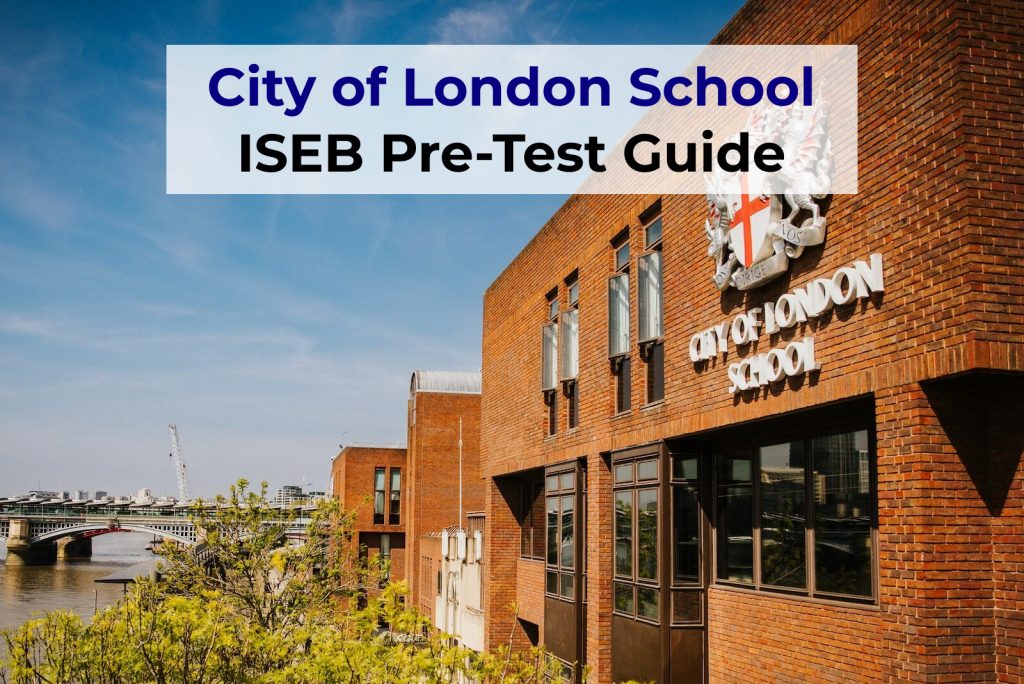
If you’re a parent preparing your son for one of the most respected boys’ schools in the UK, you’ve probably already come across the City of London School admissions process. Known for its strong academic culture, exceptional teaching, and outstanding university results, the school attracts ambitious families from across London. And for Year 7 entry, the biggest part of this journey is the City of London School ISEB Pre-Test, a digital, adaptive exam designed to assess a child’s reasoning ability, maths skills, and English understanding.
The admissions process may seem overwhelming at first, especially if this is your first time preparing for an independent school pre-test UK, but with the right guide and steady preparation, your child can confidently approach the assessment and interview stage.
Why Understanding the City of London School Process Matters
City of London School is one of the leading boys’ independent schools in London, known for its academic excellence, strong pastoral care, and high expectations. Because of this reputation, the admissions process is selective and structured. Parents often search for clear information about the City of London School ISEB Pre-Test, the assessment format, interview expectations, and how to prepare effectively.
Families usually look up:
- City of London School admissions
- City of London School entrance exam
- City of London School entry requirements
ISEB pre-test preparation
City of London School interview stage
This guide simplifies everything in easy, human words so you can support your child without stress.
City of London School Admissions
The school follows a well-organised admissions pathway for Year 7 entry. Here’s how it works:
Step 1: Registration
Parents must complete the City of London School registration process, usually by early autumn of Year 6. This includes:
- the registration form
- application fee
- school reports
Step 2: ISEB Pre-Test
Most candidates sit the City of London School ISEB Pre-Test, which is taken online either at the child’s current school or at City of London School itself.
Step 3: Interview Stage
Shortlisted students are invited for an interview with senior staff. This is a friendly, academic-focused conversation.
Step 4: School Reference
The school considers a report from the child’s current school about behaviour, academic ability, and learning habits.
Step 5: Conditional or Final Offers
Offers are released early in the new year.
The school aims to select bright, curious students who can thrive in its fast-paced academic environment.
City of London School ISEB Pre-Test – What It Actually Includes
The ISEB Pre-Test is a computer-based, adaptive exam, meaning it changes difficulty depending on how your child performs. This makes it more accurate and fairer than written exams.
The test includes four sections:
- English
- reading comprehension
- grammar
- vocabulary
- inference-based questions
- Maths
- number reasoning
- fractions and decimals
- multi-step word problems
- time, ratio, and measures
- logic-based puzzles
- Verbal Reasoning
- identifying patterns
- word codes
- synonyms and antonyms
- sentence logic
- Non-Verbal Reasoning
- shapes
- sequences
- spatial reasoning
- mirrored images
- grids and rotations
Parents preparing for selective school entrance exams UK often focus heavily on VR and NVR, because these areas are unfamiliar to children who rely only on school curriculum.
3. The ISEB Test Format – Easy Explanation
The ISEB test format is digital, timed, and adaptive. Here’s what that means for your child:
✔ Digital
They complete the test on a computer or laptop.
✔ Timed
Each section has strict minutes; students must work quickly and accurately.
✔ Adaptive
If a child answers correctly, the system gives harder questions.
If they struggle, the system lowers the difficulty.
This adaptive nature is why 11+ ISEB test practice must include mixed difficulty levels.
City of London School Entry Requirements
The school looks for:
- high reasoning ability
- strong maths foundations
- above-average reading comprehension
- curiosity and enthusiasm
- emotional maturity
- confidence during the interview
The City of London School academic assessment is competitive because many applicants come from strong prep schools, but the school welcomes boys from all academic backgrounds if they show potential.
The Interview Stage What Parents Should Know
If your child passes the pre-test, they are invited to the City of London School interview stage. This is not meant to be intimidating. The purpose is to understand how your child thinks, speaks, engages, and expresses curiosity.
Common interview topics:
- favourite books
- mental maths puzzles
- recent school projects
- hobbies and passions
- problem-solving questions
- simple reasoning tasks
Interviewers look for natural confidence, not memorised answers.
6. How Hard Is the City of London ISEB Pre-Test?
The test is designed to challenge students, especially in:
- time pressure
- multi-step reasoning
- vocabulary
- non-verbal reasoning
- inference-based comprehension
- It’s not impossible, but it requires familiarity.
Children who practise regularly with online ISEB pre-test tools perform significantly better than those who rely on books alone.
How to Prepare for the City of London School Entrance Exam
Here are simple, effective preparation strategies:
- Practise adaptive-style questions
This prepares children for the real format.
- Read widely
Fiction + non-fiction improves comprehension and vocabulary.
- Strengthen core maths
Focus on reasoning-based problems.
- Practise VR and NVR frequently
These skills improve only with repetition.
- Take timed online mock tests
This builds stamina and speed.
- Start early
Most families start in Year 5 for the best results.
- Keep preparation calm
Short, consistent sessions work better than long, stressful ones.
What Makes the City of London School Admissions Journey Unique?
Before looking at more preparation tips, it’s important for parents to understand why the City of London School admissions journey feels different from the average 11+ process.
This school is not just academically strong; it has a very particular culture, style, and expectation that shapes the entire way they assess students.
1. They Look for Thinkers, Not Memorised Answers
The school values boys who enjoy discovering ideas, asking questions, solving problems, and pushing their thinking.
This means that the City of London School academic assessment is designed to spot natural reasoning, not just tutoring.
2. The School Culture Encourages Independence
Teachers want to see curiosity and self-motivation.
So during the interview, they’ll often ask open-ended questions like:
What have you learned recently that excited you?
What do you enjoy doing when you’re not studying?
3. Fast-Paced Academic Environment
City of London is known for challenging lessons, a lively classroom environment, and a lot of intellectual discussion.
This is why the City of London School ISEB Pre-Test includes tasks that go beyond simple KS2 questions , they test logic, thinking speed, and mental flexibility.
Understanding the school’s personality helps parents guide their sons more confidently through the process.
Deep Dive Into Each Section of the ISEB Pre-Test
Many parents feel confused about what the ISEB actually tests.
Here is a warm, simple, section-by-section breakdown:
English More Than Just Reading
The English section tests your child’s ability to:
- understand what they’re reading
- pick out important details
- read between the lines
- work out meaning from context
Texts may include:
- stories
- diary entries
- articles
- short non-fiction passages
Questions might ask:
- Why did the character feel this way?
- Which sentence shows this?
- What does this word suggest?
This section rewards children who read often.
Daily reading, even for fun, builds natural confidence.
Maths Reasoning Comes First
Many parents assume maths will be straightforward, but the ISEB maths section includes reasoning-based problems.
Typical topics include:
- fractions & decimals
- percentages
- data interpretation
- multi-step word problems
- shape and space reasoning
It’s less about memorised formulas and more about thinking through problems calmly.
Verbal Reasoning Logic With Words
The VR section includes:
- word codes
- word pairs
- analogies
- missing words
- pattern spotting
This is the part many children find confusing at first because it’s not taught in primary school.
However, VR improves quickly with practice.
Non-Verbal Reasoning: Thinking With Pictures
This section uses shapes instead of words.
Children might see:
- rotating shapes
- mirror images
- sequences
- odd one out
- matching puzzles
This section tests spatial awareness and visual problem-solving.
Once children understand the patterns, their scores jump quickly.
What Makes the ISEB Pre-Test Difficult?
Parents deserve a clear, truthful explanation of why this test feels challenging:
1. It’s Adaptive
Harder questions appear when your child does well; it’s meant to stretch strong candidates.
2. It’s Timed
Children have to think quickly. There is no extra time and no going back.
3. It Covers Four Subjects
This requires balanced preparation.
4. Reasoning Sections Are New to Many Students
Most primary schools don’t teach VR or NVR, so these can feel unfamiliar at first.
5. The Competition Level
As the school is selective, your child is competing with many capable boys from across London.
With steady practice, however, the test becomes manageable and even enjoyable.
What Happens After the Pre-Test? (The Interview Stage in Detail)
If your child does well in the pre-test, they move to the City of London School interview stage.
Many parents worry about this part, but the school conducts interviews in a relaxed, conversational style.
Common Interview Features:
1. Academic Curiosity Check
They might ask:
- What book are you reading right now?
- What do you like to learn about outside of school?
2. Light Reasoning Questions
- These are not meant to trick the child.
- They simply help assess how the child thinks.
3. Problem-Solving Talks
They may give a short puzzle or riddle and ask the child to explain their thought process.
4. Personality Insight
Questions like:
- What do you enjoy in your free time?
- What makes you laugh?
- What achievement are you proud of?
The school wants to know your child as a person , not just as a test score.
Common Mistakes Parents Make (And Easy Ways to Avoid Them)
Here are the mistakes many families unintentionally make , and how you can avoid them:
- Starting Too Late
Many parents don’t realise that strong ISEB performance comes from steady progress, not last-minute cramming.
- Ignoring VR & NVR
These are the sections most boys struggle with because they’re unfamiliar.
- Over-Tutoring With No Strategy
More hours don’t always mean better results.
Smart, targeted practice is more effective.
- Forgetting Interview Practice
Even the strongest academic students can freeze in front of a teacher.
- Using Only Books Instead of Digital Tools
Since the ISEB is digital, your child must practise on-screen.
Avoiding these mistakes gives your child a huge advantage.
Building Confidence Before the Big Day
Children perform best when they feel calm and supported.
Here’s how to give your child the emotional foundation they need:
- Tell them it’s okay to get questions wrong
Perfection is not expected.
- Encourage short, happy breaks
Fresh minds think better.
- Praise effort, not just scores
This builds resilience.
- Practise interview conversations at home
This helps them speak naturally.
- Be patient when they struggle
Growth takes time.
Confidence is the quiet power behind high performance.
How Quest for Exams Helps Your Child Prepare for the City of London School Pre-Test
Quest for Exams is one of the most effective tools for families preparing for City of London School entrance exam requirements.
Here’s why parents choose it:
Real ISEB-style mock tests
Accurate digital practice that reflects the real test format.
Topic-by-topic learning
Covers maths, English, VR, and NVR separately and thoroughly.
Adaptive difficulty practice
Mirrors the real ISEB adaptive system.
Instant marking & analytics
Shows your child’s weak areas instantly.
Easy for children to use
Engaging design helps children stay motivated.
Ideal for independent school exams
Perfect for City of London School and other top London schools.
Quest for Exams removes guesswork and brings structure to your child’s preparation, helping them walk into the test feeling confident and ready.
FAQs
- What test does City of London School use for Year 7?
They use the ISEB Common Pre-Test as the first stage.
- Is the exam competitive?
Yes, it’s selective but with the right preparation, your child can do really well.
- What subjects are tested?
English, Maths, Verbal Reasoning, and Non-Verbal Reasoning.
- When should we start preparing?
Starting in Year 5 or early Year 6 ensures steady, stress-free progress for your child.
- Do we need a tutor?
Not always. Many families prepare confidently using online tools like Quest for Exams.
- What happens after the pre-test?
Children who score well move on to a friendly interview stage.