

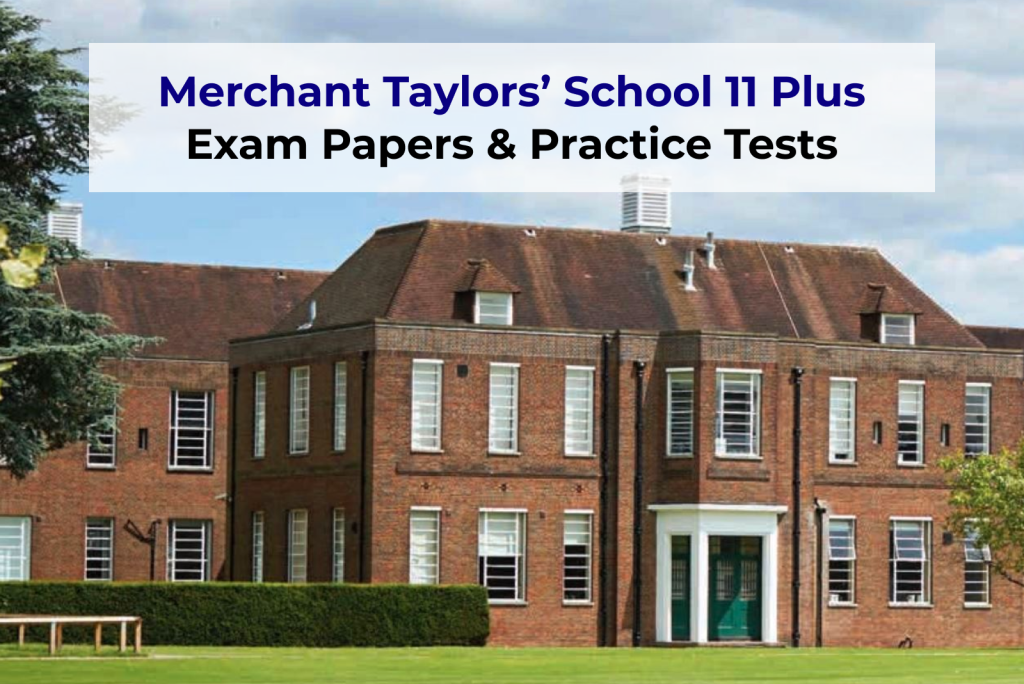
If you’re considering Merchant Taylors School for your child, you’re likely looking for ways to navigate their competitive 11+ entrance exam process. Understanding the structure of the Merchant Taylors School 11+ exam and practicing with the right materials can make all the difference when it comes to securing a place at this prestigious school.
In this guide, we will explore the various aspects of the Merchant Taylors’ School entrance exam, including exam structure, practice papers, and mock tests. With the right tools and a clear plan, you can help your child succeed in the Merchant Taylors’ School 11+ exam and feel confident on exam day.
Introduction to Merchant Taylors’ School
Merchant Taylors’ School is one of the leading independent schools in the UK, known for its academic excellence, exceptional facilities, and well-rounded approach to education. Located in Northwood, Hertfordshire, Merchant Taylors School UK offers a rigorous academic curriculum alongside excellent extracurricular opportunities in areas like Merchant Taylors School sport and arts.
The Merchant Taylors’ School entrance exam for 11+ applicants is highly competitive, and gaining admission can be a challenge. The school assesses a range of skills, from academic knowledge to reasoning abilities, to determine if a child is ready for the demands of this esteemed institution.
This article will guide you through the structure of the Merchant Taylors’ School 11+ exam, provide insights into the types of Merchant Taylors’ School exam questions, and discuss the importance of using Merchant Taylors’ School practice papers and mock tests for successful preparation.
What Does the Merchant Taylors’ School 11+ Exam Include?
The Merchant Taylors’ School 11+ exam is designed to assess a child’s readiness for secondary education. The exam typically includes multiple components that test a range of skills:
- English
- Mathematics
- Verbal reasoning
- Non-verbal reasoning
These sections evaluate not only a child’s knowledge of specific subjects but also their ability to apply that knowledge in unfamiliar contexts.
While Merchant Taylors’ School past papers may not be widely available due to the school’s policy, Merchant Taylors’ School entrance test papers and practice materials are essential for helping children prepare for what to expect on the exam day. Understanding the structure and format of each paper is critical for achieving success.
The Structure of the Merchant Taylors’ School 11+ Exam
The Merchant Taylors’ School 11+ exam consists of four key areas: English, Mathematics, Verbal Reasoning, and Non-verbal Reasoning. Here’s a breakdown of each component:
1. English Paper
The Merchant Taylors’ School English papers are designed to test reading comprehension and writing skills. In this section, children will be asked to read a passage and then answer questions based on the text. The aim is to assess a child’s understanding of the content, their ability to infer meaning, and their overall comprehension skills.
The writing section may require children to complete a creative writing task or answer questions related to grammar, punctuation, and sentence structure.
2. Mathematics Paper
The Merchant Taylors School maths papers assess a child’s understanding of core mathematical concepts. Topics typically covered include:
- Arithmetic
- Algebra
- Geometry
- Word problems
This section not only tests knowledge but also the ability to apply mathematical concepts to solve problems. Merchant Taylors School 11+ practice papers are particularly helpful here, as they often mirror the types of questions seen in the actual exam.
3. Verbal Reasoning
Merchant Taylors’ School verbal reasoning questions assess logical thinking and language skills. This section involves identifying patterns in words, completing sequences, and solving problems related to language. These questions require students to think critically about word relationships and sentence structures.
Preparing for verbal reasoning involves practising logical puzzles, finding word associations, and working through reasoning challenges that don’t require prior knowledge of the subject matter.
4. Non-verbal Reasoning
The Merchant Taylors’ School non-verbal reasoning paper tests the ability to understand and analyze visual information. This includes patterns, shapes, and sequences. Children will be asked to identify the next shape in a series or determine how shapes relate to one another.
Non-verbal reasoning is often one of the most challenging areas for children because it doesn’t rely on written language skills. However, with consistent practice using Merchant Taylors’ School mock exam papers, children can improve their ability to solve these types of puzzles quickly.
Why Merchant Taylors’ School Practice Papers Are Essential
One of the best ways to prepare for the Merchant Taylors’ School 11+ exam is by working through Merchant Taylors’ School practice papers. These papers are designed to reflect the actual exam format and will help children become familiar with the types of questions they’ll encounter.
Regular practice with Merchant Taylors’ School practice papers offers several benefits:
- Familiarity with question styles: Children will learn how to approach different question types, such as comprehension questions, problem-solving tasks, and reasoning puzzles.
- Time management: By practicing with timed papers, children will develop the ability to manage their time effectively during the real exam.
- Identifying weak areas: Working through Merchant Taylors’ School past papers allows parents and children to pinpoint areas that need improvement.
By practising consistently, children will build the confidence and skills they need to excel on exam day.
The Role of Mock Tests in Exam Preparation
Merchant Taylors’ School practice papers, taking Merchant Taylors’ School mock tests is a key part of preparation. Mock tests simulate the actual exam experience, including the time constraints and the pressure of answering under timed conditions.
Mock tests allow students to:
Assess their readiness: Mock tests provide a clear picture of how well a child is performing and which areas need more attention.
Build confidence: By practising in a simulated exam environment, children become more comfortable with the structure and pace of the test.
Practice under timed conditions: Time management is crucial in the 11+ exam, and mock tests help children get used to working within a set time limit.
Many parents find that Merchant Taylors’ School mock exam papers are particularly helpful in the final few weeks leading up to the exam. This is when children should focus on fine-tuning their skills and practising under pressure.
How to Use Merchant Taylors’ School Exam Questions Effectively
It’s important to approach Merchant Taylors School exam questions strategically. Rather than simply working through questions, children should:
- Review mistakes: When a child gets a question wrong, it’s essential to understand why. Reviewing mistakes helps identify gaps in knowledge and areas that need improvement.
- Focus on weaker areas: After identifying weaknesses, children should target practice in those areas. For example, if verbal reasoning is challenging, they should dedicate extra time to practicing word puzzles and sequence questions.
- Keep track of progress: Regularly tracking performance in Merchant Taylors’ School mock exam papers or practice papers helps children see how far they’ve come and boosts their confidence.
Creating a Balanced Study Plan for Merchant Taylors’ School 11+ Exam Preparation
While it’s tempting to dive into intense study sessions, it’s important to keep exam preparation balanced. A focused, consistent approach works better than cramming or studying for hours on end. Here’s a simple study plan to follow:
1. Start Early
Begin preparation well before the exam date. Starting in Year 4 or early Year 5 gives children plenty of time to get familiar with the exam structure and practice different subjects.
2. Set a Weekly Schedule
Create a weekly study plan that includes time for:
- English: Focus on reading comprehension and writing skills.
- Maths: Solve problems and practice core concepts.
- Reasoning: Spend time on both verbal and non-verbal reasoning.
- Breaks: Include regular breaks to avoid burnout.
3. Take Mock Tests Regularly
Introduce mock tests at regular intervals, starting with one every few weeks and increasing the frequency as the exam date approaches.
4. Review Mistakes
After each practice session or mock test, take time to review mistakes and clarify any doubts. This ensures that children learn from their errors rather than repeating them.
5. Focus on Confidence-Building
Encourage your child and celebrate their progress. Confidence is key, and a child who feels supported and reassured is more likely to perform well.
The Importance of Emotional Support During Preparation
While academic preparation is crucial, emotional support plays a significant role in a child’s success during the Merchant Taylors’ School 11+ exam.
- Encourage positivity: Remind your child that the 11+ exam is just one part of their academic journey.
- Maintain a calm environment: A positive, calm atmosphere at home can reduce anxiety and help children perform better under pressure.
- Celebrate effort, not just results: Focus on the effort your child puts into preparing, rather than solely on the outcome of the exam.
Approaching the Merchant Taylors’ School 11+ Exam with Confidence
As the date of the Merchant Taylors’ School 11+ exam nears, parents may feel a mixture of excitement, nervousness, and even anxiety. It’s understandable – getting your child ready for a highly competitive entrance exam can feel overwhelming at times. However, one of the most important things to remember during this process is that preparation is key, and it’s more than just academic ability.
Helping your child approach the exam with confidence, emotional resilience, and the right mindset will set them up for success. As parents, it’s your role to provide reassurance, structure, and balanced support. Your child’s confidence, mindset, and emotional readiness often play just as important a role as their knowledge of the subjects.
Focus on Building a Growth Mindset
While preparing for the Merchant Taylors’ School 11+ exam requires technical skills and knowledge, mental resilience is just as important. Children who approach their studies with a growth mindset, the belief that effort and practice lead to improvement, are more likely to stay motivated, even when faced with challenges.
Help your child develop this mindset by focusing on progress, not perfection. Encourage them when they make small improvements, even if they don’t fully grasp a concept. Remind them that making mistakes is part of the learning process. Celebrate their effort, not just the outcome.
Understanding the Key Skills Tested in the Whitgift 11+ Exam
As we’ve discussed, the Merchant Taylors School 11+ exam tests a variety of skills. Below is a deeper dive into the key areas assessed in the exam:
1. English Paper: Mastering Comprehension and Writing
The English paper at Merchant Taylors School is designed to test reading comprehension and writing skills. For the reading comprehension section, children are typically given a passage of text and asked to answer questions that test their understanding of the content, themes, and inferences.
The writing portion evaluates your child’s ability to:
- Present ideas clearly and logically
- Use correct grammar, punctuation, and spelling
- Form coherent sentences and paragraphs
To perform well on the English paper, your child needs to practice reading a variety of texts and answering questions that require them to interpret and analyze the material. It’s also essential to focus on writing regularly, whether that’s through creative writing exercises or answering structured questions.
Merchant Taylors’ School English papers assess the ability to think critically and communicate clearly. Practising these skills regularly helps your child feel more confident in their ability to respond quickly and accurately.
2. Mathematics Paper: Mastering Mathematical Concepts and Problem Solving
In the Merchant Taylors’ School maths paper, the focus is not just on rote memorisation of formulas, but on problem-solving and the application of mathematical concepts. This is the area where children can often get tripped up, as some of the questions may be framed in unfamiliar ways.
The key mathematical concepts usually tested include:
- Arithmetic: basic number operations, fractions, percentages, and ratios
- Algebra: solving simple equations and understanding patterns
- Geometry: understanding shapes, angles, and areas
- Word problems: applying mathematical reasoning to real-life situations
To improve in this area, encourage your child to practice Merchant Taylors’ School 11+ practice papers focused on maths. Start by working through simpler questions before moving to more complex problems. Help them identify common problem-solving strategies and avoid rushing through problems.
3. Verbal Reasoning: Sharpening Logical Thinking and Word Relationships
The verbal reasoning section at Merchant Taylors’ School tests how well a child can understand and manipulate language. This section includes questions based on synonyms, antonyms, analogies, and word sequences. The ability to recognize patterns in words and logical relationships is key.
To prepare for verbal reasoning:
- Have your child practice identifying word pairs that are related (such as synonyms or antonyms).
- Work through puzzles and word games that encourage quick thinking and logical reasoning.
Verbal reasoning tests a child’s logical thinking and language skills, which are critical in their ability to read, understand, and communicate clearly. Practising verbal reasoning questions from Merchant Taylors’ School mock tests helps children become familiar with the type of questions they’ll face.
4. Non-verbal Reasoning: Improving Pattern Recognition
Non-verbal reasoning evaluates how well a child can identify patterns and relationships in shapes and symbols. This section may involve completing a sequence of shapes or identifying the next shape in a pattern. It assesses a child’s ability to think abstractly and spatially.
Non-verbal reasoning is often one of the most difficult sections for children, simply because it is less related to what they are taught in school. To prepare:
- Practice visual puzzles that involve shapes and patterns
- Work through logic puzzles that challenge your child to think creatively
- Encourage your child to work through Merchant Taylors’ School mock exam papers to get used to the time constraints and pressure
The Importance of Practice Papers and Mock Exams
One of the most effective ways to prepare for the Merchant Taylors’ School 11+ exam is to regularly work with practice papers and take mock exams. These materials help children familiarise themselves with the format and time constraints of the actual exam, reducing anxiety on the big day.
Benefits of Using Practice Papers
Merchant Taylors’ School practice papers closely replicate the format and content of the actual exam, helping children:
- Familiarise themselves with the exam layout and types of questions
- Develop the necessary time management skills
- Identify areas where they need improvement
- Build confidence by seeing their progress
Regular practice with these papers helps children to:
- Recognise question types that may appear in the exam
- Understand what areas they need to spend more time on
- Learn how to pace themselves during the exam
Why Mock Exams Matter
Taking mock exams is a crucial part of the preparation process. Mock exams simulate the experience of sitting the actual Merchant Taylors’ School 11+ exam under timed conditions. They give children a chance to practice their exam technique, manage stress, and review their performance afterward.
Mock exams help children become comfortable with:
- Working within time limits
- Adjusting to different types of questions
- Coping with the pressure of a real exam
How to Use Merchant Taylors’ School Exam Papers Effectively
Simply working through Merchant Taylors’ School past papers is not enough; it’s important to approach them strategically. Here are some tips for using Merchant Taylors’ School exam questions effectively:
- Start with familiar questions: Begin with practice papers that are slightly easier than the real exam. This will help build confidence before tackling harder questions.
- Time yourself: Practicing under timed conditions is crucial. Encourage your child to complete practice papers in the same time limits as the actual exam.
- Review mistakes: After completing practice papers, sit down with your child to go over the questions they got wrong. Understanding why they made mistakes is the key to improvement.
- Focus on weak areas: Use the results from practice papers to identify weak points in your child’s knowledge. Spend extra time working on those areas before the exam.
The Right Mindset for Success
While academic ability is crucial, a positive mindset is equally important when preparing for the Merchant Taylors’ School entrance exam. Help your child approach the process with a healthy attitude by:
- Setting realistic goals: Focus on gradual improvement, not perfection.
- Encouraging breaks: Don’t forget to schedule rest time to avoid burnout.
- Celebrating progress: Acknowledge improvements, whether they’re big or small.
The key to success in the Merchant Taylors’ School 11+ exam is not only hard work, but also staying calm, confident, and balanced.
How Quest for Exams Can Help Structured Practice and Progress Tracking for 11+ Success
Preparing for the Merchant Taylors’ School 11+ exam can feel like a daunting task, but with the right tools and resources, the process becomes far more manageable. Quest for Exams offers a comprehensive suite of resources tailored to independent school entrance exams, including Merchant Taylors’ School 11+ practice papers and mock tests.
Here’s how Quest for Exams can support your child’s preparation:
- Structured study plans: Our study plans are designed to help your child focus on the right material at the right time.
- Progress tracking: Stay updated on your child’s strengths and weaknesses with detailed feedback after each practice session.
- Exam-style practice: Our resources closely replicate the Merchant Taylors’ School entrance exam, ensuring your child is fully prepared for the real thing.
With Quest for Exams, you can rest assured that your child is getting the best support possible for their 11+ journey.
FAQs
- What is the Merchant Taylors’ School 11+ exam?
The Merchant Taylors’ School 11+ exam is an entrance test for boys looking for confirmation to Year 7 at Dealer Taylors’ School. It regularly incorporates English, Maths, Verbal Thinking, and Non-Verbal Thinking papers.
- What subjects are covered in the exam?
The exam covers:
- English (reading comprehension and writing)
- Mathematics (arithmetic, problem-solving)
- Verbal Reasoning (language and word relationships)
- Non-Verbal Reasoning (patterns, shapes, and sequences)
- Are there practice papers available for the exam?
Yes, Merchant Taylors’ School practice papers are available and highly recommended for preparation. These practice papers mirror the structure and difficulty of the actual exam.
- How important are mock exams for preparation?
Taunt exams are exceptionally imperative. They offer assistance children hone beneath planned conditions, oversee stretch, and distinguish ranges that require advancement.
- When should I start preparing for the 11+ exam?
It’s best to start preparation in Year 4 or early Year 5. This gives your child enough time to become familiar with the exam format and practice key skills.