

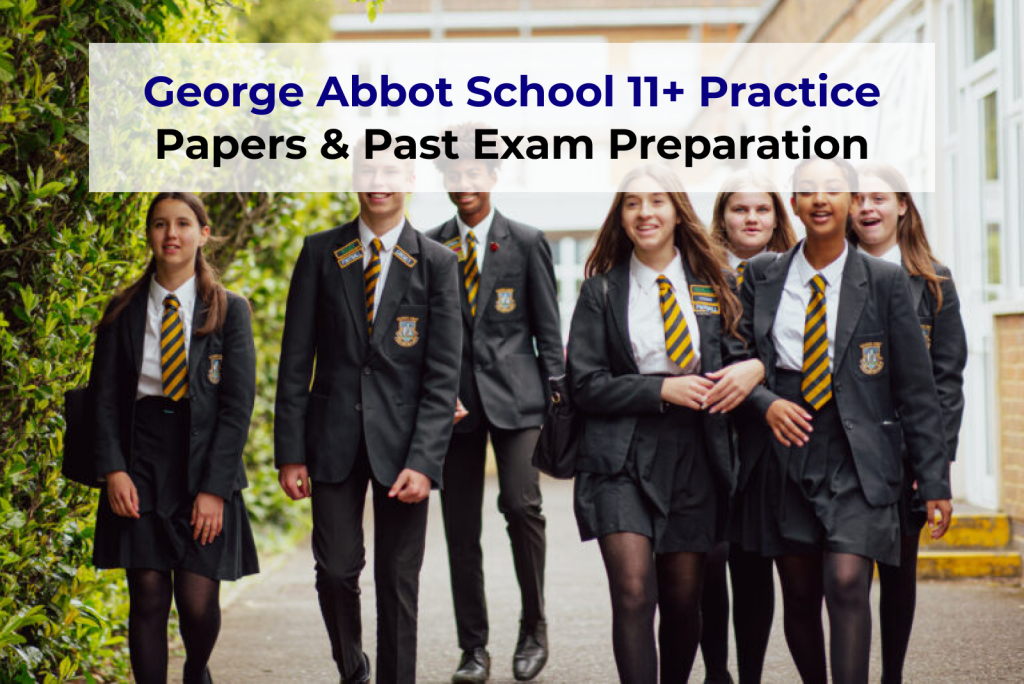
Preparing your child for a selective school exam can feel overwhelming , especially when the stakes are high and information online feels scattered. If you’re targeting George Abbot School, you’re not alone. Many parents across Surrey and nearby areas look for clear guidance on how to approach the George Abbot School 11+ exam in a calm, structured way.
This guide is written to help parents understand how George Abbot School 11+ practice papers, mock tests, and past-style exam preparation really work , without stress, jargon, or confusion. Whether your child is just starting Year 4 or already deep into Year 5 preparation, this article gives you a clear roadmap.
Understanding George Abbot School and Its Selective Reputation
George Abbot School is a well-known secondary school located in Guildford, UK, respected for its academic standards and balanced approach to education. As a highly competitive George Abbot School secondary option, entry is not automatic and requires strong performance in entrance assessments. Parents often confuse the process with a traditional grammar test. While George Abbot grammar school exam style questions may appear, the assessment focuses on how well a child can think, reason, and apply knowledge , not just memorise answers. Because of this, targeted George Abbot School exam preparation becomes essential.
What Is the George Abbot School 11+ Exam?
The George Abbot School 11+ exam is designed to assess a child’s readiness for secondary-level learning. It does not simply test what a child knows , it tests how they think under exam conditions.
The George Abbot School entrance exam typically includes:
- Maths problem-solving
- English comprehension and writing skills
- Verbal reasoning
- Non-verbal reasoning
Parents often search for George Abbot School entrance test papers or George Abbot School exam questions, but official past papers are rarely released. That’s where structured practice becomes critical.
Why George Abbot School 11+ Practice Papers Matter
Using George Abbot School 11+ practice papers is one of the most effective ways to build confidence and exam readiness. These papers mirror the difficulty level, question style, and timing pressure of the real test.
Well-designed George Abbot School practice papers help children:
- Understand exam structure
- Improve time management
- Reduce exam-day anxiety
- Identify weak areas early
Parents who skip practice papers often notice that their child “knows the work” but struggles in the actual exam , a common and avoidable problem.
The Role of George Abbot School Past Papers
Since official George Abbot School past papers are not publicly available, most preparation relies on past-style papers based on historic formats and trends.
High-quality past-style papers:
- Reflect real exam difficulty
- Avoid trick questions unrelated to the syllabus
- Help children recognise patterns
- Build exam stamina
This approach is far more effective than random worksheets pulled from different sources.
Maths Preparation: What to Expect
George Abbot School maths papers focus less on rote calculations and more on reasoning, logic, and applied problem-solving.
Key areas often include:
- Number operations
- Fractions and percentages
- Word problems
- Logical thinking
- Time and measurement
Regular practice using George Abbot School exam questions ensures your child doesn’t panic when maths questions are presented in unfamiliar formats.
English Preparation: Reading, Writing, and Understanding
George Abbot School English papers assess how well a child can read, understand, and respond thoughtfully.
Typical components include:
- Reading comprehension
- Vocabulary understanding
- Sentence structure
- Short writing tasks
Children who read well but lack exam practice may struggle with timing. Structured George Abbot School exam preparation ensures they learn how to extract answers efficiently.
Verbal Reasoning Explained Simply
George Abbot School verbal reasoning tests a child’s ability to work with language logically. This includes:
- Word relationships
- Synonyms and antonyms
- Codes and sequences
- Logical deductions
These skills improve with practice , not memorisation. Consistent exposure through George Abbot School mock exam papers makes a significant difference.
Non-Verbal Reasoning: Visual Thinking Skills
George Abbot School non verbal reasoning focuses on patterns, shapes, and sequences. Children unfamiliar with this question type often find it intimidating at first.
With regular George Abbot School mock tests, children learn how to:
- Spot visual patterns quickly
- Apply logic rather than guess
- Work calmly under time limits
This section often becomes a confidence booster once children understand the rules.
Why Mock Tests Are Essential
Taking mock tests under timed conditions is one of the most valuable preparation steps.
Mock exams help:
- Simulate real exam pressure
- Identify time-management issues
- Build resilience and focus
- Reduce fear of the unknown
Parents often notice that children who take regular George Abbot mock exam papers perform better, even if their academic level is similar to others.
Creating a Balanced George Abbot School Exam Preparation Plan
A successful George entrance exam preparation plan should be steady, not intense.
A healthy approach includes:
- 2–3 practice sessions per week
- One full mock test every few weeks
- Review of mistakes, not just scores
- Regular breaks to avoid burnout
Over-preparation often causes anxiety, while under-preparation causes panic. Balance is key.
Common Mistakes Parents Make
Many parents unknowingly slow progress by:
- Using papers that are too easy or too hard
- Focusing only on marks, not understanding
- Starting mock tests too late
- Ignoring verbal or non-verbal reasoning
Targeted George Abbot School exam preparation avoids these issues by following a structured path.
Administrative Notes Parents Often Ask About
Parents frequently search for George Abbot School Wisepay for fee-related matters and school services. While Wisepay is used for payments and school activities, it has no direct role in the entrance exam process.
Still, staying organised early reduces last-minute stress.
Why George Abbot School Guildford Attracts So Many Families
Located in Guildford, UK, George Abbot School UK is known for:
- Strong academic results
- Supportive learning environment
- Balanced extracurricular activities
- Focus on student wellbeing
This reputation explains why competition for entry remains high every year.
How Children Emotionally Experience the George Abbot School 11+ Journey
One thing many guides forget to talk about is how children feel during George Abbot School exam preparation. Parents often focus on timetables, papers, and scores, but for children, the experience is emotional as much as academic.
At ages 9–10, children are still developing confidence. When they hear phrases like entrance exam or 11+, many quietly assume the pressure is about proving their worth. This is why George Abbot School mock tests should be introduced gently , as practice, not judgment.
Children who view George Abbot 11+ practice papers as learning tools rather than pass/fail tests tend to stay calmer and more motivated.
Why Consistency Beats Intensity Every Time
Some families try to compress all preparation into a few intense months. Unfortunately, this often backfires.
A child who does:
30–40 minutes, three times a week
will almost always outperform a child who:
studies two hours every day for a short burst
For entrance exam preparation, consistency allows skills to settle naturally. Verbal reasoning improves gradually. Non-verbal reasoning becomes intuitive. Maths confidence builds step by step.
Burnout, on the other hand, causes children to rush, guess, or shut down , even when they know the answers.
How to Review Practice Papers the Right Way
One of the biggest mistakes parents make after completing George Abbot School practice papers is focusing only on the final score.
Instead, the most progress comes from asking:
- Why was this answer wrong?
- Was it misunderstanding, speed, or pressure?
- Did my child rush or overthink?
Review sessions should feel like problem-solving together, not correction time. This approach strengthens understanding and confidence , especially with George Abbot School maths papers and George Abbot School English papers, where children often make avoidable mistakes.
Time Management: The Hidden Skill Behind High Scores
Many children lose marks not because they don’t know the material, but because they run out of time.
Timed George Abbot School mock exam papers teach children:
- when to skip and return
- how long to spend per question
- how to stay calm when stuck
These skills don’t come naturally , they must be practised. Without mock tests, even strong students can struggle on exam day.
Building Confidence in Verbal Reasoning
George Abbot School verbal reasoning can feel abstract at first. Words, codes, and sequences often confuse children who are otherwise strong readers.
The key is repetition with variety:
- Similar question types
- Gradually increasing difficulty
- Clear explanations after mistakes
Over time, patterns start to click. Children stop guessing and begin applying logic confidently. This is where structured George Abbot School exam questions make a real difference.
Non-Verbal Reasoning: From Fear to Familiarity
Many children initially dislike George Abbot School non verbal reasoning because it feels unfamiliar. Shapes don’t “explain themselves” like words do.
But once children understand:
- rotation rules
- symmetry
- sequence progression
Non-verbal reasoning often becomes one of their strongest sections. Familiarity removes fear , and fear is usually what causes mistakes.
The Importance of Exam-Style Language
One subtle challenge in the George Abbot School entrance exam is language style. Questions are often worded carefully and sometimes indirectly.
Children who practise only generic worksheets may struggle with:
- long instructions
- multi-step questions
- conditional wording
This is why exam-style George Abbot School entrance test papers are essential. They teach children how to read what the question is really asking.
Helping Your Child on Exam Day
By the time exam day arrives, learning should already be done. The focus shifts to emotional support.
Helpful reminders include:
- You don’t need to answer everything.
- Skip tricky questions and come back.
- You’ve practised this , trust yourself.
Avoid last-minute cramming. A calm breakfast, familiar routine, and reassurance go much further than revision sheets.
What Success Really Looks Like
Success in the George Abbot School 11+ exam isn’t only about acceptance letters. It’s also about teaching children:
- how to prepare independently
- how to manage pressure
- how to recover from mistakes
Even children who don’t secure a place often gain confidence and skills that benefit them throughout secondary school.
Supporting Without Over-Managing
Parents sometimes worry they aren’t “doing enough.” Others worry they’re doing too much.
Healthy support means:
- providing resources
- keeping structure
- stepping back when needed
- Children perform best when they feel supported , not supervised every minute.
Why a Structured Platform Makes Life Easier for Parents
Many parents juggle work, school runs, and multiple children. Planning George Abbot School exam preparation manually can become exhausting.
A structured platform reduces stress by:
- organising practice papers
- tracking progress automatically
- highlighting weak areas clearly
- saving parents time
- Instead of guessing what to do next, parents gain clarity.
Final Words for Parents on the George Abbot School Journey
Preparing for George Abbot School Guildford is not about creating pressure or competition. It’s about giving your child the tools to perform calmly, confidently, and fairly.
When preparation is steady, exam-style, and supportive, children walk into the exam room knowing:
I’ve practised this. I know what to do.
That confidence matters just as much as knowledge and often more.
How Quest for Exams Can Support Your Child’s Journey
A Smarter, Calmer Way to Prepare for George Abbot School
Preparing for George Abbot 11+ practice papers shouldn’t feel chaotic or overwhelming. That’s where Quest for Exams comes in.
Quest for Exams offers:
- Exam-style George Abbot School practice paper
- Realistic George Abbot School mock tests
- Structured progress tracking for parents
- Child-friendly design that builds confidence
- Clear feedback instead of confusing scores
Rather than random worksheets, Quest provides a focused system that mirrors real exam expectations , helping children walk into the exam calm, prepared, and confident.
FAQs
Is George Abbot a grammar school?
No. While the George Abbot grammar school exam style may appear in reasoning questions, George Abbot School is a selective secondary school, not a traditional grammar school.
Are official George Abbot School past papers available?
Official George Abbot School past papers are not publicly released. Most preparation relies on high-quality past-style papers.
How early should preparation start?
Most families begin light preparation in Year 4 and structured practice in Year 5.
Do mock tests really help?
Yes. Mock exam papers help children manage time, pressure, and unfamiliar question formats.
Which subjects are tested most?
Maths, English, verbal reasoning, and non-verbal reasoning all play an important role in the George Abbot School 11+ exam.