

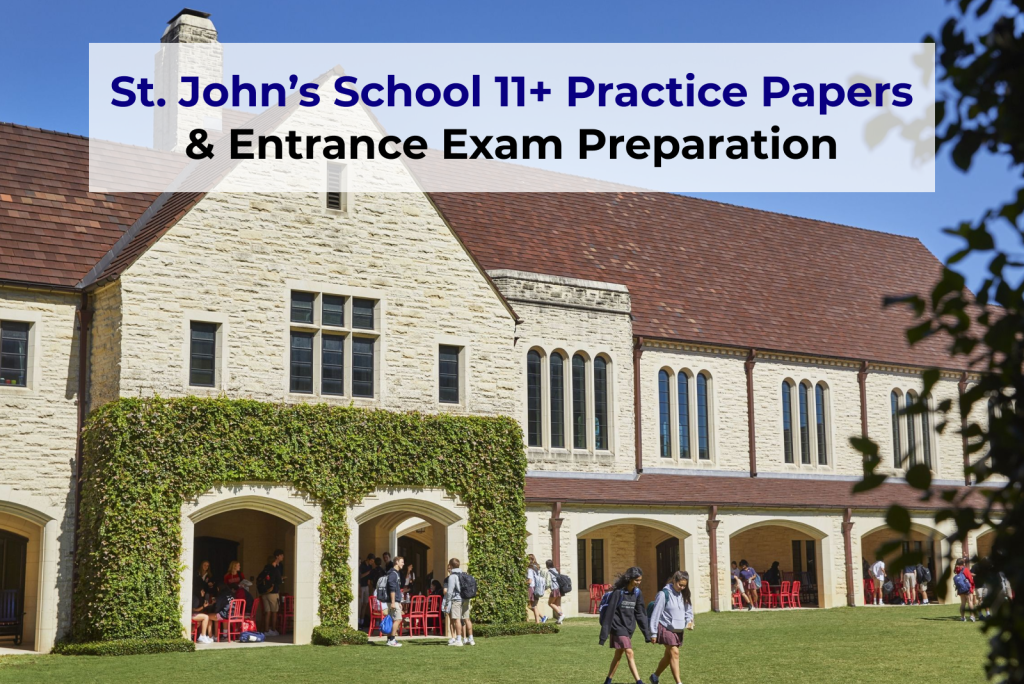
Preparing your child for a selective school exam can feel like stepping into unfamiliar territory. There’s pressure, uncertainty, and often conflicting advice from different sources. If your family is aiming for St Johns School, it’s completely normal to want clarity about how the 11+ process works and how to prepare in a calm, effective way.
This guide is written for parents who want simple explanations, realistic expectations, and practical steps. Whether your child is in Year 4 just beginning the journey, or already in Year 5 with the exam approaching, this article will help you understand St. John’s School 11+ practice papers, mock tests, and entrance exam preparation , without stress or confusion.
Understanding St. John’s School and Its Selective Entry
St. John’s School is a respected secondary school in the UK, known for its academic standards, strong pastoral care, and balanced approach to education. Because of its reputation, competition for places is high, and admission is based on performance in entrance assessments rather than automatic progression.
Parents sometimes assume that St. John’s School secondary entry is similar to other schools in the area. In reality, the selection process is designed to identify children who can think independently, manage exam pressure, and apply knowledge confidently.
That’s why structured St. John’s School exam preparation is so important.
What Is the St. John’s School 11+ Exam?
The St. John’s School 11+ exam assesses more than just what your child has learned in class. It looks at how well they can:
- Solve problems under time pressure
- Understand written information
- Recognise patterns and relationships
- Apply logic rather than memorisation
The St John’s School entrance exam usually includes a combination of:
- Maths
- English
- Verbal reasoning
- Non-verbal reasoning
Because official papers are not usually released, families rely on St. John’s School entrance test papers and exam-style resources that closely match the real format.
Why St. John’s School 11+ Practice Papers Are So Important
Using St. John’s School 11+ practice papers helps children become familiar with how the exam feels, not just what it tests.
Good practice papers help children:
- Understand question wording
- Learn how to manage time
- Reduce anxiety through familiarity
- Identify strengths and weaknesses early
Without proper practice, even capable students can feel overwhelmed on exam day.
This is why consistent use of St. John’s School practice papers is a key part of successful preparation.
Are St. John’s School Past Papers Available?
Parents often search for St. John’s School past papers, but official past exams are rarely published.
Instead, most preparation uses:
- Past-style papers
- School-specific exam formats
- Carefully designed mock questions
High-quality St. John’s School exam questions reflect the real difficulty level and structure, helping children practise in a realistic way without surprises.
Maths Preparation: What to Expect
St. John’s School maths papers focus on understanding and application rather than speed alone.
Common areas include:
- Arithmetic and number skills
- Fractions, decimals, and percentages
- Word problems
- Logical reasoning
Children often lose marks not because they can’t do maths, but because questions are presented in unfamiliar ways. Regular exposure to exam-style questions builds confidence and accuracy.
English Preparation: Reading and Writing Skills
St. John’s School English papers assess how well a child can read, understand, and respond thoughtfully.
This usually includes:
- Reading comprehension
- Vocabulary
- Grammar and sentence structure
- Short written responses
Children who enjoy reading may still struggle if they’re not used to answering under time pressure. Structured St. John’s School exam preparation helps them learn how to extract key information efficiently.
Verbal Reasoning Explained Simply
St. John’s School verbal reasoning tests how children work with language logically. It’s less about spelling and more about relationships between words.
Typical tasks include:
- Synonyms and antonyms
- Codes
- Sequences
- Logical deductions
These skills improve steadily with practice. Children often see the biggest improvement here after working through St. John’s School mock exam papers regularly.
Non-Verbal Reasoning: Visual Thinking Skills
St. John’s School non verbal reasoning focuses on patterns, shapes, and sequences. For many children, this is completely new at first.
With practice, children learn to:
- Spot patterns quickly
- Understand rotations and symmetry
- Apply rules logically
Regular St. John’s School mock tests help turn initial confusion into confidence.
Why Mock Tests Make a Real Difference
Timed St. John’s School mock tests are one of the most valuable preparation tools.
They help children:
- Experience real exam conditions
- Learn how to pace themselves
- Manage nerves
- Build stamina
Parents often notice that children who practise with St. John’s School mock exam papers feel calmer and more prepared on the actual exam day.
Creating a Balanced Preparation Plan
A strong St. John’s School entrance exam preparation plan doesn’t mean studying every day for hours.
A healthier approach includes:
- Short, focused sessions
- Regular practice papers
- Occasional full mock tests
- Time for rest and normal activities
Children learn best when preparation feels manageable, not overwhelming.
Common Mistakes Parents Make
Some well-intentioned mistakes can slow progress, such as:
- Starting mock tests too late
- Using resources that are too difficult
- Focusing only on scores, not understanding
- Ignoring reasoning sections
Balanced St. John’s School exam preparation avoids these pitfalls by building skills gradually.
Is St. John’s School a Grammar School?
Parents sometimes ask about the St. John’s School grammar exam. While the exam may include grammar-style reasoning questions, St. John’s School UK is not a traditional grammar school.
It is a selective secondary school that looks for well-rounded academic ability rather than rote learning.
Supporting Your Child Emotionally
At this age, confidence matters as much as ability. Children preparing for St. John’s School 11+ exam often worry about letting parents down.
Helpful support includes:
- Encouragement over pressure
- Praise for effort, not just results
- Keeping perspective about outcomes
- A calm child performs far better than an anxious one.
Exam Day: What Really Helps
By exam day, preparation should already be complete.
What helps most:
- A familiar routine
- No last-minute cramming
- Calm reassurance
- Trust in the practice done
Children who have worked through St. John’s School 11+ practice papers usually walk in knowing what to expect , and that makes a huge difference.
How Children Really Experience the St. John’s School 11+ Journey
When parents think about the St. John’s School 11+ exam, they often picture papers, scores, and deadlines. Children experience it very differently. For them, this journey can feel confusing at first , a mix of curiosity, pressure, and sometimes quiet worry.
At the age of 9 or 10, children don’t always know how to express exam stress. Some become unusually quiet. Others rush through questions. A few may suddenly say they “don’t like school anymore.” These reactions are common during St. John’s School exam preparation, and they don’t mean a child isn’t capable.
What helps most is familiarity. When children regularly work with St. John’s School 11+ practice papers, the exam stops feeling mysterious. Familiarity reduces fear, and fear is often the biggest obstacle to good performance.
Why Confidence Often Matters More Than Ability
Many children preparing for St. John’s School UK are academically strong. Yet not all strong students perform equally well in entrance exams.
The difference often comes down to confidence under pressure.
Children who:
- panic when stuck
- rush to finish quickly
- overthink simple questions
may score lower than peers who stay calm, even if their knowledge level is similar. This is why repeated exposure to St. John’s School mock tests is so valuable. Mock exams teach children that feeling unsure is normal , and that they can move past it.
Confidence is built through experience, not reassurance alone.
The Importance of Question Familiarity
One overlooked part of St. John’s School entrance exam preparation is learning how questions are framed.
Entrance exams often:
- use longer instructions
- combine multiple steps into one question
- expect careful reading rather than speed
Children who practise only standard school worksheets may struggle with this transition. Working through St. John’s School entrance test papers helps children learn how to slow down, read carefully, and avoid careless mistakes.
This skill alone can significantly improve results.
Maths: Understanding Over Speed
In St. John’s School maths papers, speed is helpful , but understanding is essential.
Many maths questions are designed to test:
- whether a child understands the concept
- whether they can apply it in a new context
- whether they can ignore unnecessary information
Children who rush often miss key details. Regular, timed practice helps them learn when to slow down and when to move on.
Parents can support this by encouraging explanation, not just answers:
- Can you tell me how you got that?
This deepens understanding and builds confidence.
English: Thinking Beyond the Text
St. John’s School English papers require more than good reading ability. They test whether a child can:
- identify key ideas
- infer meaning
- answer precisely
Some children read fluently but struggle to explain what they’ve read under time pressure. Practising exam-style questions helps them learn how to extract information efficiently and respond clearly.
Encouraging regular reading at home , novels, articles, or even well-written non-fiction , supports this naturally.
Verbal Reasoning: A Skill That Grows Slowly
St. John’s School verbal reasoning is often one of the slowest sections to improve , and that’s completely normal.
Unlike maths or English, verbal reasoning doesn’t follow a school syllabus. Children may initially feel frustrated, especially when patterns or codes don’t make sense right away.
Progress comes from:
- repetition
- pattern recognition
- reviewing mistakes calmly
With time, children start recognising familiar question types. What once felt confusing begins to feel manageable, and confidence grows steadily.
Non-Verbal Reasoning: Turning Confusion Into Confidence
For many children, St. John’s School non verbal reasoning feels strange at first. Shapes, sequences, and rotations don’t offer clues through language.
The breakthrough usually comes when children realise that:
- every question follows a rule
- guessing rarely works
- slowing down improves accuracy
Regular practice allows children to develop a systematic approach. Once that happens, non-verbal reasoning often becomes one of the more enjoyable sections.
Why Reviewing Mistakes Matters So Much
One of the most powerful learning moments happens after completing St. John’s School mock exam papers.
Reviewing mistakes helps children:
- understand where they went wrong
- recognise patterns in errors
- learn how to approach similar questions next time
It’s important that reviews feel supportive, not critical. Mistakes should be framed as part of learning, not failure.
A simple shift from:
Why did you get this wrong?
to
What do you think this question wanted?
can change a child’s mindset completely.
Avoiding Burnout During Preparation
Burnout is more common than parents realise during St. John’s School 11+ exam preparation.
Signs include:
- reluctance to practise
- irritability
- rushing through papers
- loss of confidence
These signs don’t mean a child needs more practice , they usually mean they need less, or a change in approach.
Shorter sessions, rest days, and variety can restore motivation and focus.
How Parents Can Support Without Adding Pressure
Parents play a crucial role in shaping how children experience the St. John’s School entrance exam.
Helpful support includes:
- keeping routines predictable
- avoiding comparisons with other children
- focusing on effort rather than outcomes
- reminding children that one exam does not define them
Children are very sensitive to parental stress, even when it’s unspoken. A calm parent often leads to a calmer child.
The Role of Routine in Exam Readiness
Routine helps children feel safe and prepared. During preparation, this might look like:
- practising at the same time of day
- using similar timings to the real exam
- following a consistent review process
By the time the exam arrives, the experience feels familiar rather than intimidating.
This familiarity is one of the biggest benefits of regular St. John’s School 11+ practice papers.
Exam Day: What Truly Makes a Difference
On the day of the exam, knowledge is already in place. What matters most is mindset.
Children perform best when they:
- feel rested
- know what to expect
- understand they don’t need to answer everything
A calm morning, normal breakfast, and reassuring words go a long way. Last-minute revision often increases anxiety and rarely improves performance.
Looking Beyond the Outcome
While gaining a place at St. John’s School secondary is the goal, the preparation journey itself has lasting benefits.
Children learn:
- how to manage pressure
- how to focus for extended periods
- how to recover from mistakes
These skills support them throughout secondary school and beyond, regardless of the final result.
A Gentle Reminder for Parents
Every child develops at a different pace. Some peak early. Others grow steadily over time. Entrance exams capture only a snapshot of ability on one particular day.
The true success of St. John’s School exam preparation lies not just in results, but in helping children build confidence, resilience, and a healthy attitude toward challenges.
When preparation is calm, consistent, and supportive, children walk into the exam knowing:
I’ve practised this. I can handle it.
And that belief can make all the difference.
Giving Your Child Space to Grow During the Final Weeks
As the exam date gets closer, many parents feel an urge to do more , more papers, more reminders, more revision. While this reaction is understandable, the final weeks before the St. John’s School 11+ exam are often about consolidation, not acceleration.
By this stage, children usually know what they know. What they need most is reassurance and stability. Keeping routines familiar helps children feel safe and grounded. Practising at the same time of day, using similar timings, and maintaining a calm atmosphere can reduce last-minute nerves significantly.
It’s also important to allow space for normal childhood activities. Playing outside, seeing friends, or enjoying a favourite hobby helps reset the mind. Children who feel emotionally balanced often concentrate better when they return to practice.
During these weeks, quality matters more than quantity. One well-reviewed paper is far more valuable than several rushed ones. Gentle reminders like “Take your time” or “Skip and come back” reinforce strategies children already know, without adding pressure.
Most importantly, children should feel that their effort is appreciated regardless of the outcome. A child who feels supported will walk into the exam room calmer and more focused than one who feels watched or judged.
The goal of preparation is not perfection , it’s confidence. When children believe they are prepared and trusted, they are far more likely to show what they can truly do on the day.
That quiet confidence, built over weeks of steady practice and emotional support, is often the strongest advantage of all.
How Quest for Exams Can Help with St. John’s School Preparation
A Calm, Structured Way to Prepare , Without the Guesswork
Preparing for St. John’s School entrance exam preparation doesn’t need to feel confusing or overwhelming. Quest for Exams is designed to support both children and parents with clarity and structure.
Quest for Exams offers:
- Exam-style St. John’s School practice papers
- Realistic St. John’s School mock tests
- Clear progress tracking for parents
- Child-friendly design that builds confidence
- Feedback that explains mistakes, not just scores
Instead of random worksheets, Quest provides a focused system that mirrors real exam expectations , helping children feel prepared, confident, and calm.
FAQs
Is St. John’s School a grammar school?
No. While grammar-style questions may appear, St. John’s School secondary is a selective school, not a traditional grammar school.
Are official St. John’s School past papers available?
Official St. John’s School past papers are not usually released. Most preparation uses past-style practice papers.
When should preparation start?
Many families begin light preparation in Year 4 and structured practice in Year 5.
Do mock tests really help?
Yes. St. John’s School mock tests help children manage time, pressure, and unfamiliar question styles.
Which subjects matter most?
Maths, English, verbal reasoning, and non-verbal reasoning all play an important role in the St. John’s School 11+ exam.